 10/100BASE-T SFP
H3C QSFP56-200G-D-DAC Compatible 200G QSFP56 4 x 50G PAM4 Passive Copper Twinax Cable
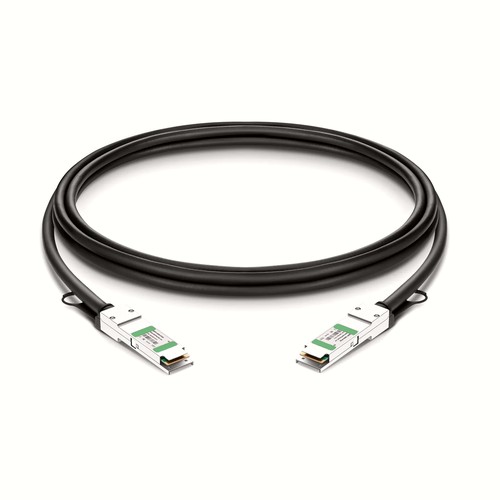
This H3C QSFP56-200G-D-DAC compatible cable series provides 200G connectivity through a QSFP56 to QSFP56 configuration. It is a factory-terminated passive twinax link without separate optical modules or patch cords. The page brings together the series specifications, compatibility guidance and direct links to the individual length and OEM part-number pages used for ordering.
Series Part Number: QSFP56-200G-D-DACHT Part Number: QSFP56-200G-D-DAC
Product Highlights
- HT-manufactured compatible alternative for H3C QSFP56-200G-D-DAC
- 200G aggregate connectivity at 200Gbps
- Interface configuration: QSFP56 to QSFP56
- Passive Twinax / Copper
- Length configurations covered: 1m (3ft), 2m (7ft) and 3m (10ft)
- Conductor specification: 30AWG
- Power consumption: 0.03W Per End
- Operating temperature: 0 to 70°C (32 to 158°F)
Available Lengths and Corresponding Part Numbers
The documented configurations are 1m (3ft), 2m (7ft) and 3m (10ft). Each link below opens the separate product page for that physical length and its corresponding OEM part number. Select the exact assembly required by the route and purchase order; custom project lengths can be discussed separately.
Compatible OEM Part Numbers
- QSFP56-200G-D-DAC-1M
- QSFP56-200G-D-DAC-2M
- QSFP56-200G-D-DAC-3M
Specifications
| H3C Compatible | QSFP56-200G-D-DAC-2M |
|---|---|
| Manufacturer | HT |
| HT Part Number | QSFP56-200G-D-DAC |
| Form Factor | QSFP56 to QSFP56 |
| Max. Data Rate | 200Gbps |
| Media | Copper |
| Cable Type | Passive Twinax |
| Cable Length Options Covered | 1m (3ft), 2m (7ft) and 3m (10ft) |
| Wire AWG | 30AWG |
| Minimum Bend Radius | 39mm |
| Max. Power Consumption | 0.03W Per End |
| Jacket Material | PVC |
| Commercial Temperature Range | 0 to 70°C (32 to 158°F) |
| Protocols | IEEE802.3cd, SFF-8436 |
Applications and Deployment
A passive DAC reduces the connection to one factory-terminated electrical assembly. This is useful where low latency, low interface power and a short managed route matter more than optical reach. Cable gauge, connector construction and host port settings still influence whether the complete link operates reliably. For this series, the listed interface is QSFP56 to QSFP56 and the aggregate rate is 200G.
Quality Assurance and Packaging
Each assembly receives a visual connector inspection and functional link check before it is coiled and protected. Packaging is selected to avoid compressing the cable into a tight bundle, and optional rack-based labels help maintain an orderly installation when many identical interfaces are populated together. Both connector ends are inspected as part of the complete assembly, and protective packing is selected to avoid tight bends during transport and storage.
Cable Construction and Routing
The specification table records the conductor specification is 30AWG; the jacket material is PVC; the minimum bend radius is 39mm; the operating temperature is 0 to 70°C (32 to 158°F); the power consumption is 0.03W Per End. Use those values when preparing the rack pathway and receiving checklist. Do not pull a connector by its cable, compress the run under tight ties or force excess length into a sharp coil. Connector protection should remain in place until the assembly is ready for insertion.
High-Density Rack Integration
In a densely populated rack, connector access and airflow are part of the link design. Choose the shortest length that follows the managed path comfortably, avoid tight bundles around the connector housings and preserve room for latch operation. Where power consumption is listed, include every populated interface in the host thermal budget rather than assessing a single cable in isolation. For this series, keep the interface rate, DAC construction and length-specific OEM reference together throughout that review.
Ordering Information
Provide the exact part number, length, quantity and target interface density. For multi-rack projects, list each length separately and identify any preferred carton grouping. Host model and software information can be included for a compatibility review before production or dispatch. For this series, follow the corresponding length link, quote that exact OEM part number and keep different lengths on separate order lines. HT part number QSFP56-200G-D-DAC identifies the product family; the linked page provides the final length-specific identity.
H3C Compatibility and Factory Testing
The assembly is evaluated for host recognition and stable link operation, with diagnostics checked where the interface provides them. This approach verifies more than electrical or optical continuity. Exact platform and firmware information remains valuable in high-density deployments because port mode and qualification policy can differ within the same connector family. Series-level inspection is followed by the exact length and OEM configuration selected for dispatch. Functional verification includes link establishment and diagnostic indications where the host exposes them.
Shipping and Lead Time
Standard configurations normally ship within one to three working days, with production lead times confirmed for larger quantities. International courier, air freight and sea freight are available; customer courier accounts and nominated forwarders are accepted.
Frequently Asked Questions
Is this an original H3C cable?
No. It is an HT-manufactured compatible cable for equipment that specifies QSFP56-200G-D-DAC, not an original H3C-branded product.
Are different lengths and OEM part numbers separate products?
Yes. Where a length has its own OEM reference, follow the corresponding link above and order that exact part number on its own line. Do not substitute another length only because the connector arrangement is the same.
Does this DAC cable require separate modules at each end?
No. The connector ends and cable form one complete direct-attach assembly. The ends are not detachable standalone transceivers, and the complete product is tested together.
What information helps confirm compatibility?
Provide the equipment manufacturer and model, port type, hardware revision and software release, together with the required OEM reference, length and quantity. Breakout projects should also identify the intended lane configuration.
